English
 簡(jiǎn)體中文


The research and development directions for smart three phase?energy meters can be explored from multiple perspectives, including technological innovation, market demand, application scenarios, and policy guidance. Here are some key R&D directions:
1. Communication Technology:
???- Introduce advanced communication protocols such as NB-IoT, LoRa, Zigbee, etc., to ensure real-time data transmission and remote monitoring capabilities.
???- Utilize 5G technology to increase data transmission speed and reliability, supporting the interconnection of large-scale devices.
2. Data Analysis and Management:
???- Develop intelligent data analysis algorithms that utilize big data technology and machine learning methods to optimize energy consumption analysis, forecasting, and management.
???- Provide real-time electricity monitoring, load curve analysis, and anomaly detection for unusual electricity usage.
3. Integration with IoT and Cloud Platforms:
???- Combine three phase?energy meters with the Industrial Internet of Things (IIoT) platforms to achieve centralized management and control of devices.
???- Develop cloud-based energy management systems that support multi-user collaboration and data sharing.
4. User Interface and Experience:
???- Enhance user experience by developing intuitive and user-friendly interfaces for viewing data and remote monitoring.
???- Provide mobile applications or web platforms for users to monitor real-time electricity usage and billing information.
5. Security and Privacy Protection:
???- Strengthen data security measures by adopting stronger encryption technologies to protect user information and data transmission security.
???- Ensure the physical security of the devices to prevent tampering and electricity theft.
6. Renewable Energy and Demand Response:
???- Support the integration of renewable energy sources such as solar and wind power, enabling monitoring and management of multiple energy sources.
???- Develop demand response features that allow users to adjust their electricity usage based on real-time pricing and grid demand.
7. Multi-Function Integration:
???- Integrate power factor measurement, harmonic analysis, and other functions to provide enhanced power quality monitoring capabilities.
???- Implement multiple measurement functionalities, such as energy measurement, power measurement, and voltage monitoring, within a single device.
8. Policy and Standard Adaptation:
???- Track and research domestic and international technical standards and policy trends related to smart meters to ensure products rapidly adapt to market demands.
???- Participate in the activities of standardization organizations to promote the development of industry standards.
By integrating the above directions, developing smarter, user-friendly, and secure three phase?energy meters will provide significant value and efficiency improvements for the electricity industry and its users.
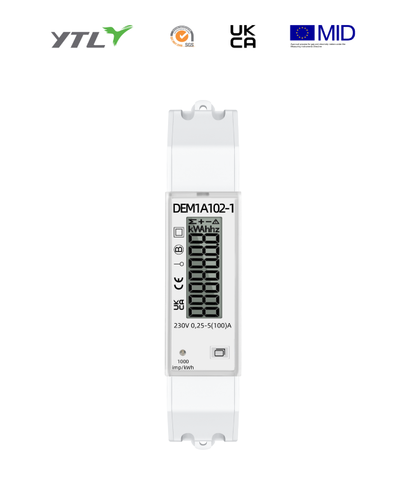
.png?imageView2/2/w/500/h/500/format/png/q/100 "YTL Two Phase Three Wire LCD Shunt sampling Energy Meter")